Selling as a Strategy
Whatever reason is behind selling your equipment, retiring your entire inventory isn’t a single action—it’s a structured, multi-step process that blends operations, valuation, market conditions, and timing. To do this well, it is best to treat it like as a strategic approach towards getting maximum returns – and not just as a sale.
Here's how it works at Black Star.
1. Equipment Assessment & Inventory
First we identify key information:
- Asset list (make, model, year)
- Usage (hours/mileage)
- Condition (mechanical, structural)
- Maintenance history
- Current book value
- Estimated market value

2. Financial Review
Before going to market, we will help you to look at the equipment values to give you an idea of the best overall return on your total equipment investment, which includes current market values, expected sale price, and any potential losses.
3. Complete Dispersal Strategy
Not all equipment has to be sold the same way. Our approach includes:
- Dedicated live or timed online auctions
- Private buyers
- Dealers for high-demand, best-condition equipment
It is about more than just getting rid of your equipment. We understand it is important to maintain operational continuity and not disrupt any in-progress projects. We work to make this seamless, and the best possible experience for our customers.
4. Timing & Pricing
Before selling, we’ll assess current demand, equipment shortages, market values, and seasonal trends.
5. Execution of Sales
Typical go-to-market approach:
- Clean & prepare equipment (Seller)
- Perform minor repairs if ROI-positive (Seller)
- Gather documentation - service records, titles (Seller)
- List the equipment (Black Star)
- Marketing/promotional advertising (Black Star)
- Stage Yard (Seller/Black Star where necessary)
- Sell (Black Star)

Sales channels:
- Auctions (fast turnover)
- Direct/private sale (higher margins, but slower)
- Dealers (convenience)
6. Settlement & Cash Collection
Once the equipment is sold, Black Star will:
- Collect payment from the buyer
- Transfer ownership/title
- Settle your account, minus any commissions/fees
7. Timeline
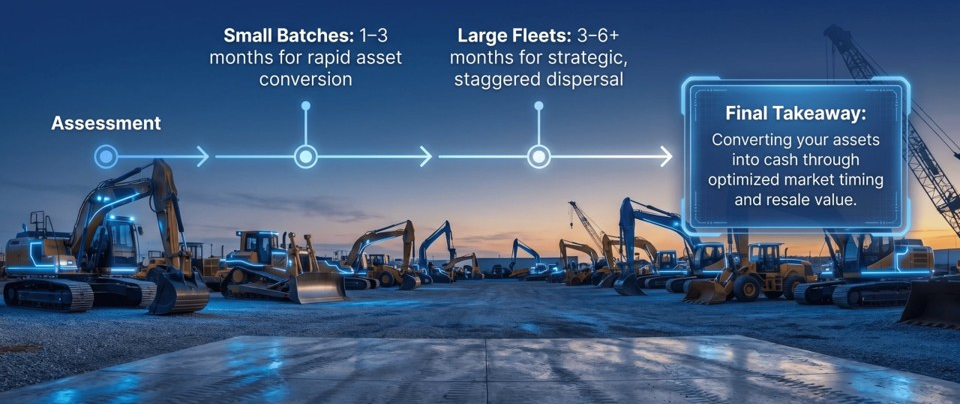
One size does not fit all. The timeline depends on the number of assets, market conditions, and whether sales are staggered.
Summary
Selling your equipment is essentially converting your assets into cash. So, whether you are closing up the business and retiring, or selling your inventory for any other purpose, our approach optimizes the sale of your current used equipment through addressing your specific circumstances and goals, market timing and resale value.