Should you repair your used construction equipment before selling?
Owning equipment that is no longer needed can quickly turn from an asset into an expense. An excavator that has been sitting in the yard, a skid steer replaced by a newer model, or a generator that no longer fits the company’s needs still has value—but the question is how to get the most out of it when it is time to sell.
One of the biggest decisions contractors face is whether to repair the equipment before selling it.
The answer isn’t always straightforward. Spending money on repairs can make equipment more attractive to buyers and potentially increase its selling price. On the other hand, putting thousands of dollars into an older machine doesn’t necessarily mean you’ll get that money back.
Before selling equipment either privately or at auction, you should consider the condition of the equipment, the cost of repairs, current demand, and what buyers are likely to value.
The Case For Repairing Equipment Before Selling
A unit that runs well, looks presentable, and is ready to go to work can be significantly easier to sell than one that needs immediate attention.
1. Repairs Can Increase Buyer Confidence
Construction equipment buyers know that used machines aren’t going to be perfect. However, obvious mechanical problems, hydraulic leaks, worn components, warning lights, or other defects can make buyers question what else might be wrong.
Taking care of known problems before listing the machine can make the sales process easier. A buyer who can inspect the equipment, start it up, operate it, and see that major issues have been addressed may be more comfortable making the purchase.
Buyers are often looking for equipment they can put to work quickly rather than machines that will spend weeks in the shop.
2. A Ready-to-Work Machine Can Command More Money
Equipment that is fully operational generally has more appeal than equipment being sold “as is.”
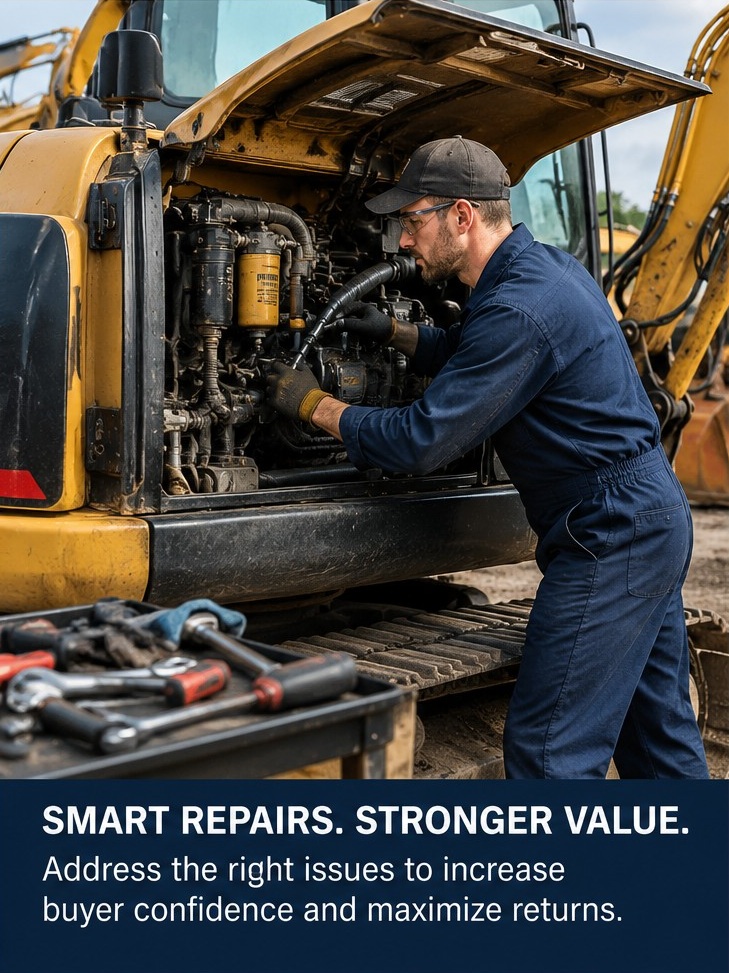
For example, replacing a damaged hydraulic hose, repairing a non-functioning attachment, servicing the engine, or addressing a known electrical problem may make a noticeable difference in how buyers value the machine.
However, its wise not to assume that every dollar spent on repairs will translate into an equal increase in selling price. The goal isn’t necessarily to make the equipment perfect. The goal is to make sensible improvements that increase its marketability.
3. Small Repairs Can Have a Big Impact
Not every repair needs to be a major mechanical overhaul. Sometimes relatively inexpensive work can make equipment considerably more appealing. Examples might include:
- Fixing broken lights or gauges
- Replacing damaged seats
- Repairing minor hydraulic leaks
- Servicing fluids and filters
- Replacing worn tires when they’re a major concern
- Repairing damaged guards or panels
- Addressing obvious electrical problems
- Cleaning and detailing the machine
- Making sure attachments operate properly
These improvements can help a machine look better during an inspection and demonstrate that it has been maintained.
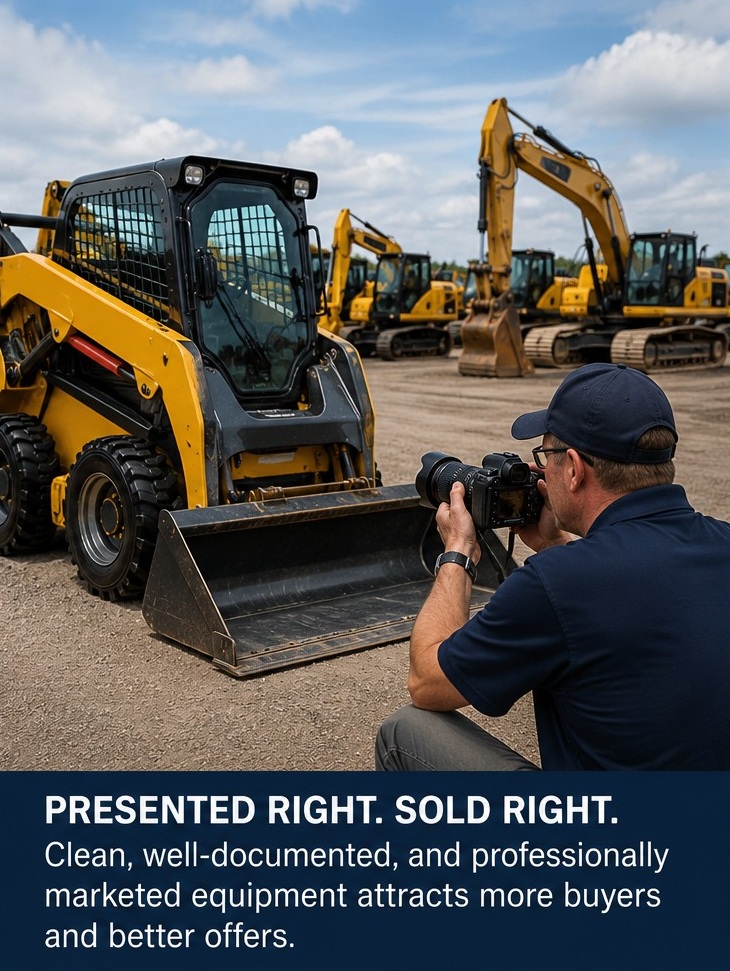
Black Star ensures your equipment is presented in the best possible light by capturing high-quality photos and videos, documenting completed and recommended repairs, and providing complete transparency about the equipment’s condition before it is listed for sale.
The Case Against Repairing Before You Sell
While repairs can add value, there are plenty of situations where spending money before selling doesn’t make financial sense.
1. You May Not Get the Money Back
The biggest risk is simple: the cost of the repair may be greater than the increase in the equipment’s selling price.
Suppose an older skid steer is worth approximately $25,000 in its current condition. You might spend $7,000 addressing several mechanical issues, expecting to sell it for $35,000.
But if comparable machines in good working condition are only selling for $29,000 or $30,000, the repair investment may not pay off.
Before carrying out repairs, research what similar equipment is actually selling for—not just what sellers are asking. Black Star is able to provide current market values so you can make an informed decision.
2. Repairs Can Uncover More Problems
Anyone who has owned construction equipment knows that one repair can sometimes lead to another.
An older excavator taken into the shop to address a hydraulic issue could also show worn pumps, damaged cylinders, or other problems. Suddenly, a repair that was expected to cost a few thousand dollars becomes a much larger project.
That is one reason it can be risky to start repairing an older machine without first establishing a clear budget and a realistic resale value.
3. Buyers May Prefer to Do the Work Themselves
Experienced contractors and equipment buyers often have their own mechanics, suppliers, and repair facilities. They may be perfectly comfortable purchasing a machine that needs work—especially if that condition is reflected in the price.
In fact, some buyers actively look for equipment they can purchase below market value, repair themselves, and put back into service. Trying to bring an older machine up to “like-new” condition may therefore be unnecessary.
Repair or Sell As-Is? A Simple Decision Framework
Before spending money on repairs, our appraisals and valuations team can always be engaged to help you with your decision to sell “as is” or repair. What needs to be considered is:
A. What the equipment worth today
Start with the machine’s current value in its existing condition.
Then, look at comparable year, make, model, hours, attachments, and overall condition, and check against recent auction results, dealer listings, private-sale listings, and other sources of market information.
Note: an asking price isn’t necessarily the same as the price a machine will actually sell for.
B. What the repair might cost:
Get a realistic estimate before making a decision. If possible, separate repairs into categories to make it easier to determine which repairs are worth considering:
Safety and functionality: Problems that prevent the machine from operating properly or create obvious safety concerns.
Cosmetic issues: Paint, dents, upholstery, decals, and other appearance-related problems.
Maintenance: Fluids, filters, lubrication, batteries, and routine service.
Major mechanical repairs: Engines, transmissions, hydraulic pumps, final drives, undercarriage components, and other expensive systems.
C. How much the repair could increase the selling price:
A $2,000 repair that allows a machine to sell for $5,000 more may be worth doing.
A $10,000 repair that only adds $5,000 to the likely selling price probably isn’t.
You should also consider whether a repair will simply make the machine easier to sell rather than dramatically increase its value. Faster sales and a larger pool of interested buyers have value, too.
Black Star has a national and global reach of qualified buyers and provide targeted marketing to get the most eyes on your equipment.
Don’t Overlook Cleaning and Presentation
One area where contractors can often improve the sale without spending heavily on mechanical repairs is presentation.
Construction equipment gets dirty. That’s expected. But there is a difference between equipment showing normal jobsite wear and equipment that looks neglected.
A thorough cleaning, removal of excessive grease and debris, fresh service records, properly inflated tires, and a clean cab can make a machine easier for a prospective buyer to evaluate.
Good photographs matter. In conducting our inspections preparing equipment for sale, we will list all equipment with clear pictures of the machine from multiple angles and include the hour meter, tires or tracks, attachments, engine compartment, cab, also any areas with known damage. Our listings also include videos of the equipment running, whenever possible. In addition, maintenance records can be provided to potential buyers if available.
Document the Work You’ve Already Done
Don’t overlook the value of maintenance and repair records.
If the machine has been serviced regularly, keep those records available. Documentation showing oil changes, component replacements, major repairs, and routine maintenance can give buyers greater confidence in the equipment’s history.
If you decide to repair the machine before selling it, keep the invoices and documentation for that work as well.
A buyer may not pay dollar-for-dollar for every repair you’ve made, but evidence that the work was performed properly can make the equipment easier to sell.
When Repairing Before Selling Usually Makes Sense
Repairing equipment before selling is often worth considering when:
- The machine has a strong resale market.
- The repair is relatively inexpensive.
- The repair addresses a major functional problem.
- The machine is otherwise in good condition.
- The equipment has reasonable hours for its age.
- Comparable machines in working condition command substantially higher prices.
- You can complete the repair at a reasonable cost.
- The repair will make the equipment substantially easier to sell.
When Selling As-Is May Be the Better Choice
Selling without making major repairs may make more sense when:
- The equipment is older and has significant hours.
- Several major components are nearing the end of their useful life.
- Repair costs are difficult to predict.
- The machine has multiple problems.
- The repair cost approaches a significant percentage of the equipment’s value.
- There is strong demand for used equipment in its current condition.
- You have limited time or shop capacity.
- The likely buyer has the ability to perform repairs more economically.
The Bottom Line
The decision to repair used construction equipment before selling should come down to return on investment—not simply making the machine look better.
A machine doesn’t need to be perfect to sell. In many cases, the smartest approach is to fix obvious, relatively inexpensive problems, complete overdue maintenance, clean the equipment thoroughly, gather the service records, and be transparent about anything that remains.
Major repairs require more careful consideration. Before spending thousands of dollars on an older machine, compare the cost of the work with the realistic increase in resale value.
In other words, don’t repair equipment simply because you can. Repair it when the numbers make sense.
The best sale isn’t necessarily the one that gets the highest asking price. It’s the one that maximizes the equipment’s net value after considering repair costs, downtime, selling expenses, and the time required to prepare the machine.
For contractors or business owners with equipment sitting unused in the yard, that calculation can be the difference between turning an idle asset into useful cash—or putting more money into a machine that was already ready to leave the fleet.